Showing posts with label career. Show all posts

Monday, January 19, 2026

Relearning My Identity — Part Two


I sat down on my couch one morning, opening my tablet to start my pre-work ritual of Wordle, study, and meditation. I was working from home on a day usually devoid of meetings. Before starting, I quickly checked the calendar on my phone to make sure I didn’t have any unexpected early meetings.

Huh. I had a 15-minute meeting scheduled for 10:10 AM. That was odd. I read more. It talked about changes at the company. I was affected.

Shit.

Again?
 
During the meeting I got confirmation that I (along with many others) was being laid off, effective immediately. I suddenly found myself with no job and all the time in the world, for the second time in two years. The first time this happened I was unprepared for the disruption, ultimately leading to a long journey of reflection and learning.

This time, I was in a much better position. I had done the work to know what is important to me and I immediately put those learnings to use. For me, that included checking on colleagues who had been laid off, doing a lot of cooking, and ramping up my running.

This post covers how I built a sense of identity that was strong enough to take a layoff in stride. The process included framing questions, brainstorming on answers, organizing the ideas, and synthesizing something useful for myself. In the end, I had built a personal guide for living my life.

This is the concluding post in a series on job loss and identity and a follow up to Relearning My Identity – Step One.

Three people facing the camera and smiling. they are outside, higher than the surrounding area, with trees behind them in the distance. The leaves are mostly off the trees and the people are wearing jackets.
On a hike with a colleague and my wife a few weeks after being laid off. 


Continuing the Journey

In Relearning My Identity – Step One I started a journey of self-redefinition. In that post I listed four draft pillars of my identity:
  1. I make things that other people use.
  2. I make the people around me better.
  3. I’m a learner who pulls together disparate ideas to create cool things.
  4. I write in service of the first three goals.
That list was a work in progress as I began making sense of my world after losing my job. It quickly became clear that the list is very focused on my professional life and misses important aspects of my non-work life. I have been thinking about that ever since. I have tried to expand and generalize my self-definition to include all parts of myself. I am happy to say that those four pillars still ring true to me and are captured in my updated sense of self, but they are no longer the top-level themes.

Brainstorming

I thought and brainstormed on the topic for five months, even as I started a new job. Along the way, I had false starts, backtracked, and reframed my effort. I shifted from trying to answer the vague question “Who am I?” to attempting a focused task: building a guide for living my life aligned with my values. The guide should answer the question of who I am, but it should also help me make decisions and accomplish my goals.

I focused my brainstorming around building that guide. I tried to capture everything about myself, whether it was good, bad, or indifferent. Then I made a value judgment about each of those aspects of myself: Was this something I wanted to embrace? Was this something I was willing to change? Was each framing or description helpful to me?

That last question was particularly interesting to me. After some reflection, I found that a number of the details I had captured were not useful to me. For example, I’m smart. I’ve known that I am smart since I was a small child. But smart is usually defined in comparison to other people. I don’t want my identity threatened when I interact with people who are smarter than me. I often work with people who are smarter than me and I want to continue doing so, because I learn and accomplish so much when I do!

For each not-useful description, I tried to find related descriptions that were useful. For instance, part of what makes me smart is my love of learning. My love of learning will never be threatened by someone else’s love of learning. My love of learning is a helpful self-description.

Explaining It All

My collected brainstormings had a lot of great things, but they didn’t add up to a guide for my life. It was now clear that the four draft themes from earlier were not that guide, either, as they missed many important parts of my life. I still needed some short collection of top-level themes to organize everything into a guide.

The correct top-level themes did not just jump out at me. To find the correct themes, I committed to making several drafts, with each iteration as different as possible from the previous. I then reviewed my attempts, creating a final list of themes that felt right to me. Those final themes, combined with all the supporting details arranged underneath them, is my life guide.

My Themes

I finished with four top-level themes:
  1. I search for and find awe and wonder in this world.
  2. I take care of myself and others.
  3. I create things of use for myself and others.
  4. I deeply enjoy myself.

Every time I read that list, I get a warm feeling. There is much more detail behind each of these four, but they capture the biggest ideals and give me something to both talk and think about.

You might notice that those four do not say “I am an engineer” or say anything explicitly about my profession. I could retire tomorrow and still satisfy all of them. Still, my professional identity fits comfortably within them, as do my original four themes.

For instance, one reason I became an engineer was because I loved (and still love) to understand how things work and how I could build them. I experience a sense of awe and wonder when learning how things are built. Being an engineer is an inherently creative endeavor, constantly creating new things. Working as a staff engineer, a large amount of my time is focused on mentoring junior colleagues and helping build a strong team culture. In other words, I’m taking care of others and myself. Finally, I regularly find opportunities to deeply enjoy myself in the role.
 
That said, each of those categories is much wider than just my professional experiences. It includes a lot of art, food, gratitude, relationships, community, learning, exercise, hobbies, volunteering, and more.

Living My Identity

I applied these learnings the day I was laid off and every day since. I started by checking in on my colleagues to see how they were doing and how I might help them. That helped me take care of others, and in the process, take care of myself. I did a lot of cooking. Cooking helped satisfy my need to create, and also allowed me to take care of my family. I ramped up my running to take care of my body during this time of stress. I also got out on the trail, filling myself with awe and wonder, and deeply enjoying myself. In fact, I took my first post-layoff hike with my wife an hour after being laid off. And I’ve kept writing, which may hit all four of my themes.

I am very proud of and happy with my updated sense of identity. It has taken a large investment of time, but it has already returned value to me. I regularly review my themes and supporting details, reflecting on my identity, making sure I am living according to my values. Like everyone else, I am continually evolving. I will make sure to regularly update my sense of identity to match that evolution.

I would encourage you to spend some time thinking about what makes you who you are. If you do, I would love to hear about what you learn along the way. I’ve included some additional resources below to help you on your way.

Thank you to Heather Beasley Doyle for her feedback on this post and her support through this entire period of my life. Heather is a gifted writer. You should check out her homepage and her writing. 

Resources


Monday, November 10, 2025

How We Choose To Tell Our Stories

Some ideas rush into our heads with urgency and fanfare. Others take their time, showing up unannounced, pretending that they have always been there. One idea quietly snuck into my head on a Friday morning, eight months after I had abruptly lost my job. The job loss had shaken me. In all previous job changes I had been driving the change  not in this one. I had found and started a new job, but I had also spent a lot of those previous eight months re-evaluating my life, particularly the stories I tell myself and others about who I am and who I want to be.

This intrusive idea gently pointed out that I also needed to decide how I wanted to tell the story of my past. The idea was right: I no longer knew how I wanted to tell the story of my previous decade. If I couldn't tell the story of my past, how could I reasonably tell the story of my present and future?

In this post I explore that idea by diving into the disruption created by my job loss. I also review what I’m doing to tell my story with a narrative I both believe and feel good about. It is part of a series of posts reflecting on losing my job.

My daughter reading a story to her second-grade class on her birthday, many years ago. 


My Story Through 2014

I can easily tell my life story through 2014. Here is the condensed version:

I grew up a smart, if awkward, kid in the suburbs with supportive parents who loved me. I did well in school and was confident that I would succeed in life. I went to college to study computer engineering. Over five great years I produced a strong academic record and a year’s worth of professional work experience. Towards the end of those five years, I met and started dating the woman I eventually married.

Yearbook photo of a teenage boy wearing a suit and tie.
High school yearbook picture of me

After graduating, I went to a top graduate school and pursued a Ph.D. I was still that same smart kid, but graduate school and research didn’t suit me as well as undergraduate classes had. I did well in my classes but struggled with the open-endedness and abstractness of the research. I also struggled with living in the midwest far away from my family. I fought through those struggles and (eventually) graduated with my Ph.D. 


Major personal life events unfolded during my grad school years. In chronological order: I married my wife, my father unexpectedly died, I attended the Final Four and watched my alma mater win (go Cuse!), and my daughter was born. 


Picture of a bridge and groom in front of a hoopah
With my wife at our wedding


Man standing on a mountain, holding a map while looking at the camera smiling
My father with a map on a hiking trip

Man in jeans and an orange t-shirt standing in the last row of a giant stadium against the back wall
Me standing in the last row of the SuperDome watching the Final Four

Picture of a sleeping newborn
My daughter at one day old

After finishing grad school, I got a job as a researcher at IBM in New York. I built a role for myself and did well. Among other things I worked on the architecture and performance evaluation of IBM POWER8 processor and co-created and ran a peer group for new hires. My wife and I continued to raise our family (now four of us after the birth of our son) and we put down roots in our new community. I joined a hiking group and hiked a lot. After nine productive years at IBM, I moved on to the next step in my professional journey.


Picture of a sleeping newborn, wrapped in a pink blanket. Both hands are out of the blanket and near his head.
My son at a few days old


Disruption to My Professional Story

I joined a small but rapidly growing company. I spent ten years with this company before I was abruptly let go. I’m still figuring out how I want to tell the story of those ten years of my professional life.

A year before I lost my job, I would have told the following story: I joined a small but growing database company that was full of excitement, optimism, and smart people. I joined a team working to understand and improve the performance of the database. We had no idea what we were doing at the start, but over time, we figured it out, building tools and processes to help ourselves. As we kept improving that infrastructure, we pushed the state of the art forward for our industry, including publishing articles about it. I took increasing responsibility for that infrastructure, first stepping into a management role, and then building a new team to cover the areas of performance testing that were still missing.

I discovered I didn’t enjoy being a manager and I transitioned into a staff engineer role, with an even stronger sense of ownership and responsibility for the performance of our software. I worked to build the best role for myself and to do right by the company. Along the way, I also helped build communities within the company and develop my junior colleagues. I celebrated that I got to work at a special place.

This is a story full of challenges, growth, and positive memories.

In my final year I would tell that story, with the addition of a big jump forward in defining that role for myself, changing jobs and managers, with all the stress that comes with that.

In the days after losing my job, I no longer knew how to tell my story. It felt like a bad breakup. I had left jobs and roles before, but I had always been the one in control, driving the change  I was not in control of this change.

Rewriting My Story

Today I am trying to figure out what story I want to tell to myself and others about my time at that job. I'm trying to reconcile my many fond memories with the very non-fond memories of the end. As described above, the first nine years are easy for me to talk about, full of challenges, growth, success, and joy. The challenge is ending the story.

I can tell a story ending with anger at the forces that resisted my intentional efforts and ultimately led to my dismissal. I always try to acknowledge my emotions, because they are my emotions. But I don't want to dedicate much of my time to anger. Anger seldom helps me advance my life goals.

I can tell a story ending with self-recrimination and self-doubt about missed signals and opportunities. I do not like this story, but I'm willing to stay with it long enough to see what I can learn from it.

I can tell a story of a company changing as it rapidly grows during times of market changes (Covid pandemic, increasing interest rates, ...) — a company changing into something that I found less exciting and welcoming. As I discussed in Special Places, change is inevitable and it’s not worth getting upset about it. Rather, we/I should acknowledge the change and celebrate that the great parts existed for a time.

Finally, I can tell a story of intentionally setting my path, taking chances, and living with whatever comes, even though that outcome wasn’t what I had wanted. That is the heart of the Scariness of Getting What You Want.

All these stories are true. I suspect the story I will eventually want to tell will include parts of all of them. It’s a messy story, including plans, intentions, emotions, and external forces. I’m working on developing that integrated story that acknowledges the bad parts so I can learn from them, while embracing and celebrating the good parts. I think it’s going to take me some time to get it right  writing this post helps.

Thank you to Heather Beasley Doyle for her feedback on this post and her support through this entire period of my life. This post has particularly benefited from Heather's help, with multiple rounds of feedback and edits. Heather is a gifted writer. You should check out her homepage and her writing. 

Tuesday, October 28, 2025

Re-Learning My Identity – Step One

(Author’s Note – This is part of a series focused on job loss and is the first of three posts focused on identity. I wrote this post in December 2024.)

This past summer I suddenly and unexpectedly lost my job. I had been contemplating leaving this job for a while, but being asked to leave still came as a horrible shock. It was scary. Losing my salary and health benefits was scary. Losing my work social network was scary. But, by far and away the scariest part was the threat to how I saw myself  my identity.

Since that day, I have focused on how I define myself. I am trying to define myself in a way that is not dependent on my job and that is robust to changes in my job. While I have just started on this journey, I wanted to share some early learnings and experiences.
 
Irregularly shaped black plaque including a green leaf prominently on the left side. The plague reads: "David Daly congratulations on your 10 years of service!"
My plaque for reaching 10 years of employment at my last job. I lost that job a couple of months after receiving the plaque. 


Backstory

For over 10 years I had worked at the same company. I had recently received a plaque from the company celebrating those 10 years, along with a nice gift, and the promise of an eight-week paid sabbatical. Over those 10 years, I had built myself into the performance person there. I knew more about testing the performance of our software than anyone else in the company. I was involved in designing and building all of our performance-testing infrastructure. Additionally, I was known in the performance engineering community as the performance guy at that company. I had published blog posts and papers about how we tested performance, and given many talks on the same subject.

Suddenly I wasn’t that person. I didn’t work there, so clearly I wasn’t the performance guy at that company. If I wasn’t that person, who was I? I was still the same husband, parent, friend, who loved to hike, cook, and read, but my professional identity was a large part of my total identity. It was gone and I felt incomplete and adrift without it.

I vowed to never let this happen again. I will no longer define myself (even just my professional self) in terms of my job. That starts by talking about my work, rather than about my job, as my work may be a job, but it may also be volunteering or a hobby. My work will be an expression of my identity, but will not be my identity itself. To meet that vow, I needed to develop a new self-definition. That is easier said than done. I’ve spent the last several months working on this challenge, and I expect to continue working on it for the rest of my life.

Learnings So Far

While I don’t have complete answers yet, I have learned a few things. I started this effort by seeing what I could learn from others: by talking to people and by reading. There’s a lot of literature around identity formation. While most of that literature focuses on adolescents, some, such as Designing Your Life, focuses on adults. The literature has recurring themes around identifying both your values and what you find rewarding. Experimentation can help confirm those learnings and test out potential identities.

I am doing that work. Thankfully, I have been doing some of that work for years, leading a very reflective life. I’m continuing to do that while keeping these new ideas in my head.

Pillars of My New Identity

I’ve started by focusing on the parts of my identity disrupted by losing my job. I intend to extend this work to have a complete sense of my identity. So far, I know that at my best:

  1. I make things that other people use.
  2. I make the people around me better.
  3. I’m a learner who pulls together disparate ideas to create cool things.
  4. I write in service of the first three goals.

Through it all, I want the world to be a better place for me having been here. The specifics of how I make the world better will change over time, but I always want to be a positive force.

At my previous job, I built tools that others used to make our product faster, and our many customers used that product to do incredible things. At my next job I will help improve software that helps small and midsized businesses focus on their key business, rather than human resources processes. I have mentored people in the past and will continue to do so, both formally and informally. I listen and give them advice to help them live their best lives. Writing lets me help more people than I could by just talking to individuals. And my learning mindset helps me do a better job at all of this.

Into The Future

I’m starting a new job in a few days. I will dive in and make the best contribution that I can. I will make sure that I express those four pillars of my identity, ultimately making the world a better place. I will also continue to explore who I want to be and work to become that person. At some point, my new job may stop being the best place for me to express and grow that identity. When that happens, I will celebrate my personal progress and shared work experiences, I will find my next, next thing, and jump forward with both feet.

Along the way, I will write about my learnings and experiences so that we can continue to grow together. I encourage you to reflect on how you define your identity and to update it, especially if you define yourself in terms of your job. Additionally, if you have experiences or perspectives that would help me on my journey, I would love to hear from you. I always love learning, and learning from others is usually the fastest path forward for me.


Thank you to Heather Beasley Doyle for her feedback on this post and her support through this entire period of my life. Heather is a gifted writer. You should check out her homepage and her writing. 

Monday, September 29, 2025

Making Sense of Disruption

I waved goodbye to the smiling faces arrayed before me on my monitor and prepared to join my next call. It was late Wednesday morning, and these were my last two calls before starting a four-day weekend. I looked forward to finishing up some tasks, cleaning up loose ends, and heading out on my annual backpacking trip. The call had been a going-away for my friend Amy. Her last day would be Friday, but this call had been scheduled for Wednesday so I could attend. My next call was my regular one-on-one with my manager, also moved up because of my time off. Things had been strained between us, so I wasn't exactly looking forward to it, but I was looking forward to getting it over with and heading out on my vacation.

I clicked the link and the video call opened. Instead of one, there were two people on this call: my manager and someone I did not know. That could not be good. Was I being put on a performance improvement plan? My boss quickly introduced the second person  she was from HR  and then continued. "David, you are not meeting my performance expectations for a staff engineer. Further, I do not see a path for you to meet those expectations. Therefore we are letting you go, effective today.”

He told me our colleague from HR would walk me through the process.

“Do you have any questions for me?" he asked.

I did have questions. I had questions for him, for her, and later, I had many questions for myself.

That Wednesday was over a year ago. Many things changed for me in that moment, and I have spent a lot of time thinking about it since then. This post introduces a series of posts about my thinking, learning, and life over the past year. The first post is out now, with the remainder to follow.


Before continuing, I would like to briefly address “You are not meeting my performance expectations.” It’s true, I wasn’t meeting his expectations. It’s also true that I was good at my job. All my formal reviews had been good to great in my 10 years in that job. I usually received glowing reviews and was promoted twice. After being let go, I received many touching notes from colleagues who were shocked and upset that I had been let go. Many of the notes directly contradicted my manager’s story.

While it is scary to say publicly that I was fired, I think it is important to the story I want to tell. I also think sharing it may help others in similar tough times.

That said, this series is not about my dismissal per se, but rather my reaction to it and my continual attempts to make sense of it so I could move on and make the most of my life, experiencing and creating as much goodness (joy, wonder, love, satisfaction, …) as possible. This story starts well before my firing, and continues well afterwards. I have tried to intentionally live my life, regularly reflecting on what makes me happy and fills me with energy, and what does the reverse. Those reflections led me to both become a manager (lead engineer), and then eventually step away from that job. After transitioning from management to a staff engineer role, I continually tried to define my own job to be the best it could for myself and my company. Those efforts set the scene for this series.

  • This series starts with me getting the role I had long worked to develop and sell. Starting that role was scary, as I then needed to deliver in that high stakes role. In this first post, I talk about framing that pressure and the nervousness of having to deliver in that new position.
  • The series continues after my dismissal as I tried to give myself the space I needed to adjust. It turns out that too much free space can be terrifying, at least for me.
  • Losing my job was a large shock to my sense of identity, and I have been actively reshaping my sense of self. Several posts in the series cover my thinking and shaping of my identity:
    • Early in my time off, I started to grapple with the question of “Who am I?” I had let too much of my identity be tied up in my job. Losing my job disrupted how I thought of myself.
    • After spending a lot of time grappling with who I am, I realized I didn’t know who I was. At least I didn’t know how to tell the story of my personal journey over the past 10 years, including losing my job.
    • After continued reflection, I returned to who I wanted to be, as a unified human being. I didn’t want a professional identity and a personal identity. I wanted one unified identity, with my professional life being one expression of that identity. I expect this will be a continuing process for the rest of my life. I feel really good about my current framing of my identity.
  • Finally, the period of reflection covered by this series ends with me starting my next job and moving on to the next chapter of my life.

These posts, including the reflection, drafts, editing, and discussion that went into them, are part of the larger process I’ve been going through as I’ve made sense of this part of my life  and my life going forward. Writing them has been a healing, growing, and positive part of my past year. I share it all with you in the hope that it might help you or otherwise resonate with you. If any of it does help or resonate, I would love to hear from you about it.

Thank you to Heather Beasley Doyle for her feedback on this post and her support through this entire period of my life. Heather is a gifted writer. You should check out her homepage and her writing. 

The Scariness of Getting What You Want

I was sitting on my mother's couch after Christmas, crossword puzzle in hand, when my stomach suddenly dropped. The puzzle hadn’t suddenly frightened me, nor had anything happened around me. Rather, my mind had jumped forward to the end of my vacation and returning to work. I liked my job. I had successfully changed it to better align with my interests and abilities over the previous year. What scared me was thinking about the stakes of those changes: I had spent a lot of political capital crafting that role for myself and I needed to deliver the expected results.

This post explores the expectations and anxiety of getting an opportunity you want and then trying to deliver on its promise. We never know how things will turn out or what challenges will arise. The most we can do is put ourselves in good situations with good chances for success, do our best, and then accept whatever comes  good or bad.

Man reclined on a couch. He's holding a tablet in his hands. A crossword puzzle is displayed on the tablet.


Desire for Change

In the summer of 2020, I left my role as a manager and shifted to a staff engineering role. I spent the next two years working with a new manager to rebuild the team, with him as its lead. We grew the team from two of us to 10, and all 10 of us continuously supported and learned from each other. I was proud of what we had built together, but with that done, I felt unsatisfied. I was not achieving the goals I had laid out for myself when I stepped away from being a manager:
 
Now I’m working to keep the parts of my role that did bring me energy, and remove the parts that did not. I absolutely love the impact I've had on how we test performance. I love all the things that we built, including our structure and processes. I love having insight into so many parts of the engineering organization and helping drive the big picture on performance testing. I love helping junior colleagues learn and grow, sharing learnings with them (so long as I don't also have to evaluate them).

Specifically, I wasn’t happy with my progress on having insight into so many parts of the engineering organization and helping drive the big picture on performance testing. So in late 2022, I set out to change my role once again.

Advocating for Change

I worked to define a new role that would make me happier. The role should have the insight and big picture impact I was missing. It should include reporting to the right level of management so I could have the reach, influence, and support to do the things I wanted. And it should include many of the things I knew filled me with energy, such as writing and sharing my learnings (blogs, papers, talks), reading and learning (research papers, blogs), and interacting with passionate people. Around this time I wrote a blog post on defining your own job. At the end of it I said:

I know what I want to do: I want to advance the state of the art of performance testing and software engineering at MongoDB, ideally through collecting, curating, and demonstrating the best ideas from the performance community and academia.

I started to pitch a role based on those things. A role in which I could interact with multiple teams, leverage the best the research community could provide us, and turn that into something real with big impact. I wrote a proposal capturing the role and talked to people about it – a lot of people.

There wasn't much appetite in my organization for a research-focused role. Everyone loved the results I had delivered using academic research, but we suffered from smaller, pressing problems that we needed to solve at that moment. Before we could invest in the larger and more interesting things, we needed to do the simpler things to solve problems today.

An Updated Proposal

I took the feedback, learned from it, and reflected. The perfect job should fit my needs and the company's needs. These conversations made the company’s needs clearer to me. I updated my role proposal to better align with both sets of needs: making our performance testing infrastructure stronger in the near term, while enabling greater things in the future. The proposal now focused on straightforward engineering work instead of research, and leaned more heavily into planning and coordination. It met my need for broad impact and the company's need for immediate results. The role would eventually enable the more advanced work I wanted to do.

I didn’t share the proposal at this point; instead, I started on the work it described. I teamed up with my product manager to write and submit a formal project proposal based on my role proposal. The project proposal laid out work for several teams for the next two years. 

Living the Change

The project was approved, with me as its technical lead. With that, I shared my updated role proposal with key people. It now described a role I was already doing.

I found a sponsor. With their help I changed teams and started reporting higher in the org chart. I was in a better place to achieve my goals for myself and for my company! Success!

Scariness

This is when things got scary. I had invested a lot of time, effort, and political capital to build this role for myself. If I didn’t succeed in the role, it would all be for naught.

I could see what I needed to do to succeed. However, there were many things I could not control. If this new role didn’t work out, I couldn’t go back to my old role – I didn’t want to, and most likely it wouldn’t be available to me if I did. No other role would be a better fit for me within the company. And, having spent most of my political capital, I couldn’t expect much help changing roles again. Essentially, my only options were to succeed or to leave. I was operating without a safety net.

Lowering the Stakes

While the differences between success and failure were stark, I didn’t want to live in fear. I worked to reframe how I looked at the situation. We never know the future with certainty, so every choice we make is a gamble. I asked myself questions about this bet: Is this a good bet? Would I make this bet again knowing what I know now? Can I live with the consequences if I lose this bet?    

As I sat on my mother's couch with my crossword puzzle, I answered these questions: Yes it is a good bet. Yes, I would make this bet again. Yes, I can live with the consequences of losing this bet.

I began to relax. The fear did not completely go away, but I could put it in perspective. Since then, I have worked hard to remember this perspective whenever that kind of fear comes back.

Similarly, I encourage you to choose your best opportunities. Whenever the future seems scary, reflect on whether you have given yourself your best chance for success and if you can accept the consequences if these chances do not pan out. If the answers are no, go make changes. If the answers are yes (I hope they are), try to keep that perspective and let go of your fear.

Thank you to Heather Beasley Doyle for her feedback on this post. I am a better writer and this is a better post due to her efforts. Heather is a gifted writer. You should check out her homepage and her writing. 

Wednesday, January 1, 2025

I’m Starting a New Job

Tomorrow (January 2nd, 2024) I start a new job. Five months ago I left my previous job with no idea of what would come next, beyond taking a long break to relax and recharge. 


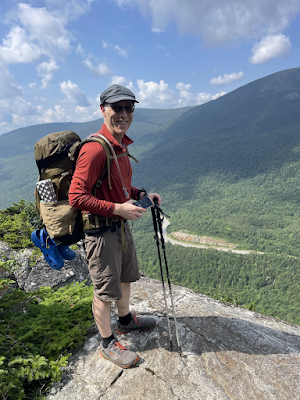
Man wearing a large backpack and smiling at the camera, standing on rock ledge overlooking a mountain valley.
Me, at an early viewpoint on Wildcat Mountain towards the start of a backpacking trip and the beginning of my 5 months off. Photo courtesy of Tom Lehmann.

Wednesday, February 28, 2024

Writing (And More) That Was Useful to Me in 2023

Sitting at my computer recently, I looked back across my notes for 2023. I was following my annual review process, reviewing the goals I had set for myself last January and the notes accumulated since then. I had a good 2023, accomplishing many of the things I had set out for myself. Those accomplishments spanned changes to my job (new role), my writing, and how I take and organize my notes. 

Several resources helped me achieve those goals in 2023. These are the books, posts, videos, and tools that helped me change my world for the better. Maybe some of them will be useful to you.


Cover of the book "The Staff Engineer's Path" by Tanya Reilly. The lower half of the cover is looking up at the outline of a large support for a suspension bridge. Where the support should be is replaced with blue sky and leaves on a branch.
The Staff Engineer's Path by Tanya Reilly was one of the books particularly helpful to me in 2023. 

Monday, September 18, 2023

Hiking My Way To My Job

I got my current job because I hike. Rather, I wouldn’t have gotten my current job if I didn’t regularly hike.
 
Many people think that their success is solely due to their hard work. They planned, put in the effort, and achieved what they set out to do. They deserve credit for what they have done. However, I also think they benefited from a large helping of luck. More importantly, I think we do everyone a disservice when we claim complete control over and credit for our own success.

Man looking at camera in left foreground. Wearing a grey cap, glasses, and an orange shirt. 

Background is looking down over trees to  a partial view of a river with hills rising up from each side.
Me on a recent hiking group outing with the Hudson River behind me.


A Story of Success


The short version: I was a smart kid. I did well in school, and got into a good college and a better grad program. I earned a Ph.D., got a great job after graduating, and then an even better job several years later. Along the way, I published papers and patents and grew my network. I worked hard, charted my path, and succeeded. This is the story that teenage David would tell, of completing my destiny to have a great career in computing.

That story is short because it leaves out a lot of details. Let’s start with the easy omissions: I was born to two loving parents who raised me in a well-to-do neighborhood with good schools. I may have been an awkward child, but all the adults (and many of the children) expected and encouraged me to succeed. Unfortunately, many people do not grow up with that support. I was very lucky.

A Story of Chance

The long version includes a number of lucky breaks. I ended up at graduate school at the University of Illinois at Urbana-Champaign (UIUC) in part because my friend and classmate went there a year earlier. Seven years later I was hunting for a job as I finished my doctorate. The company and research lab I ended up with had a strong pipeline from UIUC. If I had gone to another school, I would have been less likely to end up where I did. Further, I was hired right before a hiring freeze. My hiring manager sped up my paperwork to make sure I got in. So, if I had been on the market a few months later, I would not have ended up with the same job. I loved working in that lab and got to know many amazing people, including IEEE and ACM Fellows, National Academy Members, and a Turing award winner.


Soon after joining the company, I joined a weekly hiking group at work. Many fellow hikers became friends. I know them solely because they also like hiking and worked at the same company.

A Second Chance


Moving forward several years, I had built a nice role for myself, in which I got to work on interesting projects and was well rewarded. However, my company was not growing and had gone through periodic layoffs. I didn’t worry about my job, but I did worry about how much I could accomplish in that environment. Then, across a year, several unrelated but important things happened.


Several members of my team had a side project that suddenly became successful. They and their project were moved to a new division. I was excited for my colleagues, but it also meant I needed to find a new team. Around the same time, my youngest child was finishing daycare and starting kindergarten. His daycare was located at the site of my office, and I had been dropping him off and picking him up every day. Finally, one of my hiking buddies had been laid off and started a new job at a startup I had never heard of before.

Because of the reorganization, I had to re-evaluate my job. Because of the health of the company, I was willing to look elsewhere. Because my son was done with daycare, I was no longer tied to my current office. Because of all these things, I decided to look far and wide for my new job.


One of the places I looked into was my friend’s startup. The one I only knew about because of him. The one he worked at because he had been laid off. I told him what I was looking for and described my skillset. It turned out that his company was looking for my exact skillset at that exact moment! I interviewed and was hired.

Let’s see all the small changes that could have happened and kept me from my current job. If my colleagues’ project hadn’t taken off, I’d have no need to look for a new job. If my son was younger, I’d still be tied to the daycare. If the company was healthier, I wouldn’t have looked outside it. If I didn’t hike or my friend wasn’t laid off, I’d be completely unaware of my current company. If all of this had happened a few months earlier or later, the company wouldn’t have needed me.


Poster. Title: "Tuesday Night Hiking Schedule May and June, 2010". Below the title on the left is a picture of several people climbing up a rock scramble. To the right is a heading "Hike Rating" with text descriptions for Easy, Strenuous, and Moderate. Bottom half of poster is a table with three columns. The categories are "Date", "Hike", and "Difficulty". The "Hike" column is the largest column and takes most of the space in the table. Below the table is text: "Join us for hiking and camaraderie ...."
Hiking group poster from 2010. The man in the yellow shirt is the friend who introduced me to my current company.

Do the Random Parts Matter?


At this point you may object: David, there may have been a lot of chance involved, but things would have worked out well for you anyway – the particulars were random, but your being successful was not by chance.

You may be right. But there are two important points to consider. First, my life would have been very different in ways I couldn’t have planned if I hadn’t ended up where I did. I had an acceptable competing offer in hand – I would have ended up at a very large company, instead of a small one. All my experiences would have been very different and I strongly doubt I would have become as well known in my field as I am. I may have been successful, but it would have been a very different version of success. It would have looked like a very different plan.

Second, I have the privilege of having a lot of opportunities. Yes, I have worked hard to provide myself with opportunities, but as covered above, I have benefited from many factors outside my control. Many people do not have all those opportunities or never get the right one.

Increase Your Luck


Hard work and planning matter: they are necessary for success, but not sufficient. So, by all means, celebrate your victories. You earned them. But also acknowledge your luck and be grateful for it. I am.

Finally, consider what you can do to increase your luck. You can put yourself in good situations where things are likely to go your way. I did that by working hard in school. I did that by applying for many jobs so I could compare multiple offers. I also did it when I chose to do something I love – hiking – which happened to introduce me to many people who would become friends.